

Honest Guide to Human Trafficking Awareness Month: What No One Tells You but Everyone Should Know
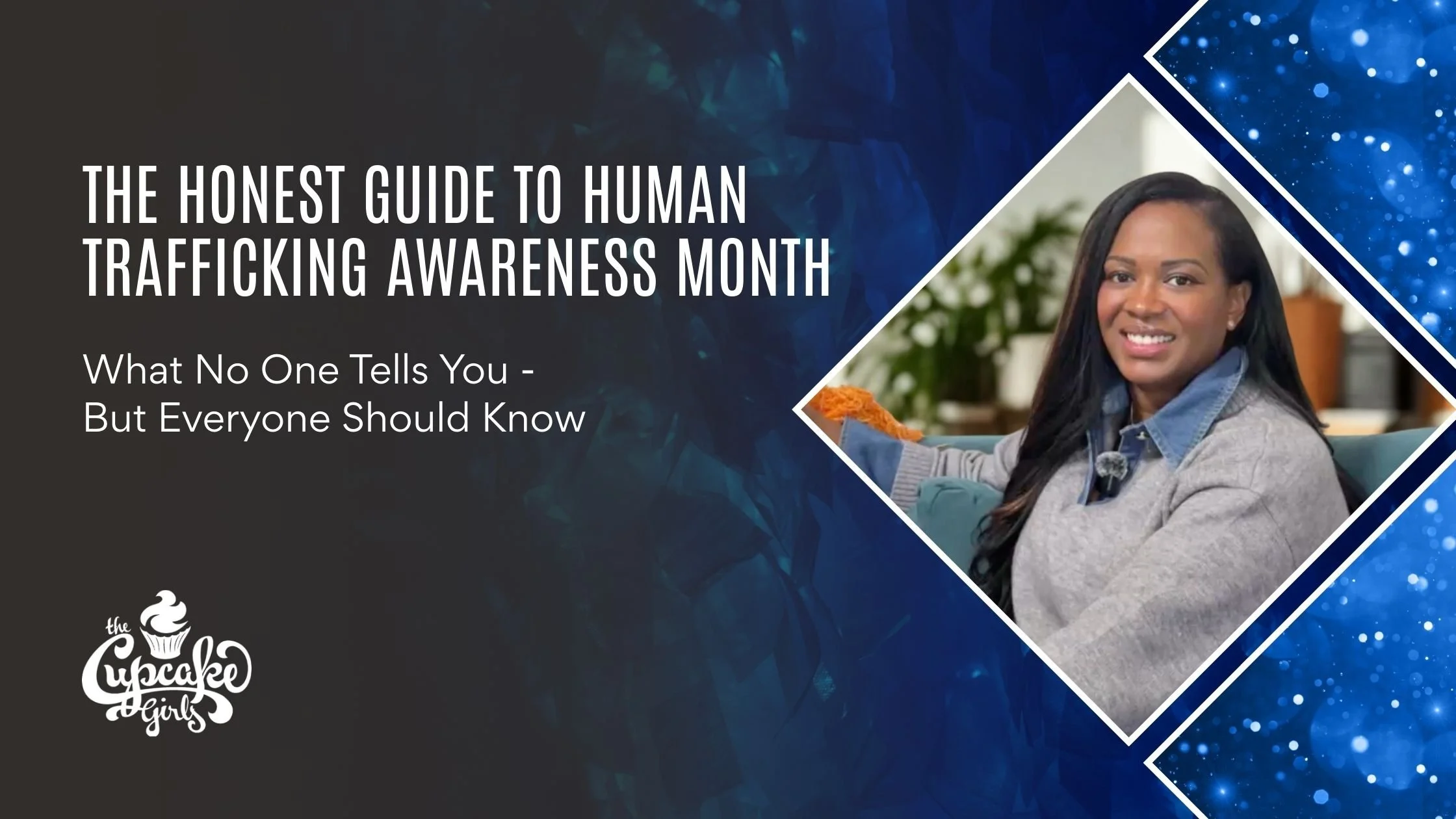
Asia Denise Duncan - National Donor Relationship Director
January always brings a new energy, fresh planning, big resolutions, and a national spotlight on Human Trafficking Awareness Month. And every year, someone asks me the same question: “How do I actually help?”
I pause, because I've been there.
Why This Work Is Personal for Me
Before I ever became the Director of Donor Relations at The Cupcake Girls, I lived through my own storm, navigating exploitation, survival, and the long, painful journey back to safety, dignity, and choice. Someone showed up for me without judgment, and it changed the entire trajectory of my life.
That’s why this month matters so deeply to me and why I’m writing about it here.
This work isn’t theoretical. It’s personal. The truth is, however, far more complex and hopeful than the headlines ever convey.
3 Things Most People Get Wrong About Trafficking
1. Trafficking rarely looks like a Hollywood movie.
It’s not always dramatic kidnapping, chains, and villains.
More often, it’s someone slowly losing choices, resources, or safety… one bill, partner, or crisis at a time.
2. Sex work and trafficking are not interchangeable.
Some enter by choice, some by circumstance, some by force, fraud, or coercion.
And all deserve safety, dignity, and control over their own narrative.
3. Stigma is the biggest danger, not the work itself.
People hesitate to seek help when they think they’ll be judged for their story. And when stigma wins, exploitation wins. Stigma is what pushes people into the shadows.
Non-judgmental support is what brings them back into the light.
How We Show Up (And How You Can Too)
At The Cupcake Girls, we meet trafficking survivors and sex workers exactly where they are, without assuming, without correcting, without asking them to “prove” their trauma, without “saving.” Just support. Just dignity. Just people caring for people. Just resources.
The impact of hearing “I believe you” is wild, how quickly self-determination starts to take root.
The work can look like:
Emergency hotel stays for survivors leaving unsafe situations
Direct financial assistance for rent, groceries, transportation, or other urgent needs
Access to trauma-informed medical care and therapists
Safety planning, community resources, and long-term stabilization
These aren’t nice-to-haves.
They’re lifelines.
And when donors show up, real people get a real chance at safety and healing.
👉 Make an immediate impact: Donate here
Do you only support people experiencing trafficking?
No. We support sex workers whether they’ve experienced exploitation or not. Safety is a right, not a reward for trauma.
How can I tell if someone is being trafficked?
There’s no universal checklist - but some common signals include:
The person is cut off from family and friends, or their communication is controlled/monitored.
They are not allowed to speak for themselves, an accompanying person is overly controlling, or they require permission to move or interact.
The individual seems excessively fearful, tense, submissive, or paranoid, and may avoid eye contact or authority figures.
Their answers to questions seem rehearsed or scripted, or they are unable to recall basic details about their daily life.
Abrupt changes in behavior, appearance, or school/workplace attendance are common.
What does “non-judgmental” actually look like?
It looks like listening.
It looks like believing.
It looks like letting someone define their own story and what healing should be.
What’s the most meaningful action I can take this month?
Talk about it.
Challenge stigma.
Give with compassion. Whether that’s time, a few dollars, or your voice.
Here’s the truth…
My story didn’t end with trauma. It evolved into purpose, advocacy, and a deep belief that community care saves lives. When you give to The Cupcake Girls, you’re not funding a program. You’re investing in someone’s journey back to safety, agency, and hope.
And if you’ve ever wondered whether your support actually changes anything…
I can tell you from lived experience:
It does. And it always will.
“So this January, I invite you to ask yourself—
How will you show up for someone fighting to reclaim their freedom this year?
If this hits home, or if you want to talk more about this work, we’d love to hear from you.” - Asia Denise Duncan (National Donor Relationship Director).